
GitHub CLI
Concept Exploration on the Command Line
Scroll ↓
Context
GitHub CLI gh delighted command line users after launching.
To build on this momentum, the main product designer and I explored early concepts to integrate the interface with the larger GitHub workflow.
Goal
Find out how important and painful it is for current gh users to move the rest of their workflow to the command line.
Problem
gh was designed to reduce the context switching from the command line to the UI. However, gh isn’t integrated with many parts of the GitHub workflow. It’s incredibly useful for working with PRs, but is there another large cost in the context switching from the CLI to returning to the UI for the end-to-end GitHub workflow?
Research Tools
Recruiting
Feature usage SQL query
Research Operations
Figma (prototype)
Analysis
MURAL (qualitative data analysis)
Deliverables
Collaborative tl;dr with top findings presented to CLI team
Atomic insights and impactful quotes submitted to the research repository
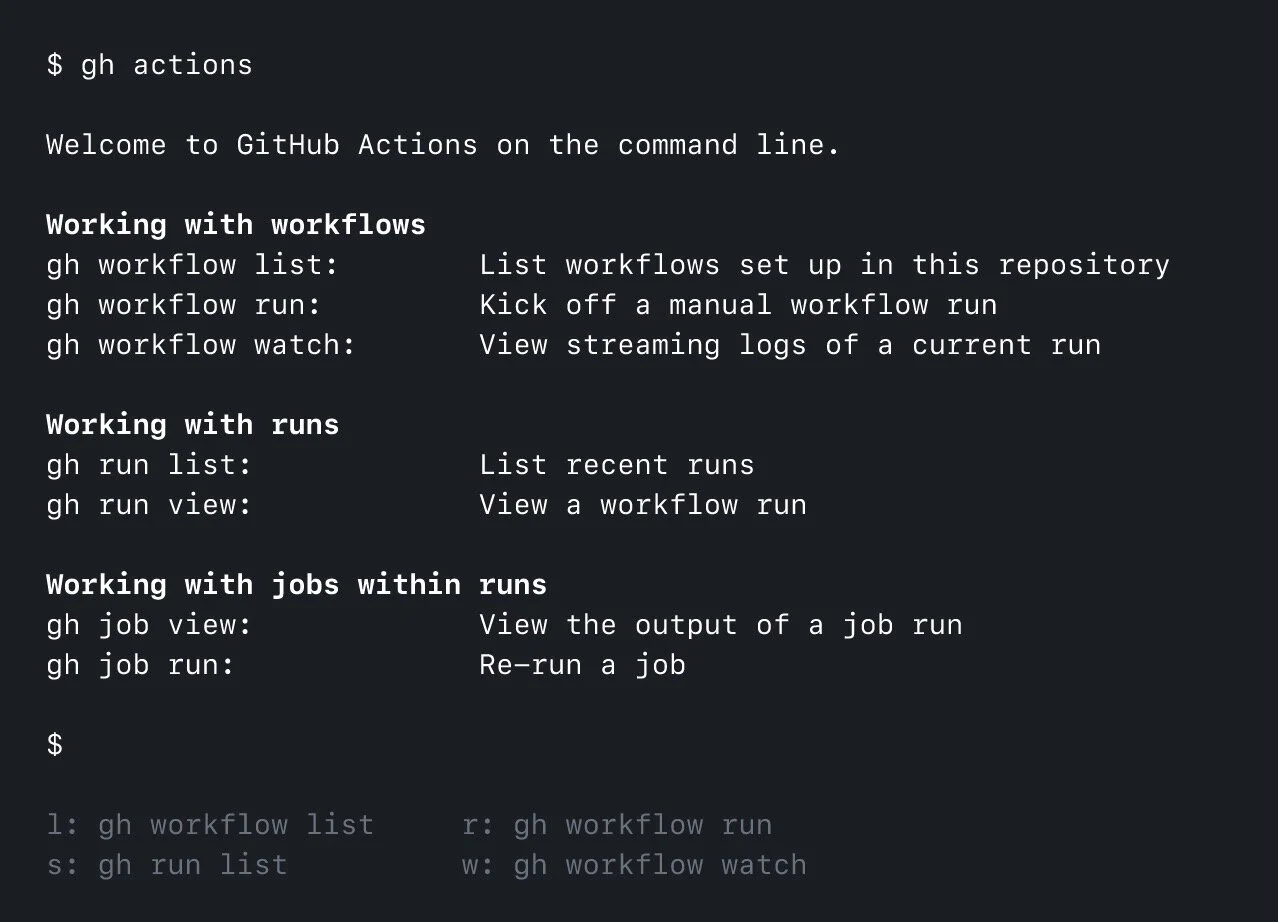
Initial sketches of the prototype
a unique design challenge given the constraints of the form
Process
We created a qualitative description of our target persona and I translated this into quantitative behavior usage metrics in a SQL query to pull a list of potential candidates . We wanted a mix of participants who use the CLI regularly without using other core workflow features and those who use both the CLI and core workflow features regularly.
We conducted 45 minute remote interviews. The interview was structured around the participants’ familiarity with the GitHub CLI tool with the core workflow and a prototype walkthrough. We used the RITE method to assess changes that could address low-effort, high-impact feedback in the prototype and implemented them. We synthesized the information, prioritized the areas of investment and evaluated where there are opportunities for integration with the core workflow.
Unclear how to proceed in text-based prototype
Given the unique design challenges of a text-based prototype, participants struggled to discern how to proceed in a text-based prototype. This posed a challenge for us: is it better to signpost the options in the prototype (and skew our participants' behavior in a way that doesn’t align with real-world usage) or allow the participant to struggle and try different options? After allowing participants to struggle, there was diminishing returns on learning their expectations and we leveraged the RITE method to address the UX feedback.
Findings
Product implications
This research defined the vision, product investment and feature prioritization for the GitHub CLI gh.